

Why More Leasing Companies Should Be Testing Business Concepts? Customer Onboarding PoC at Millennium Leasing
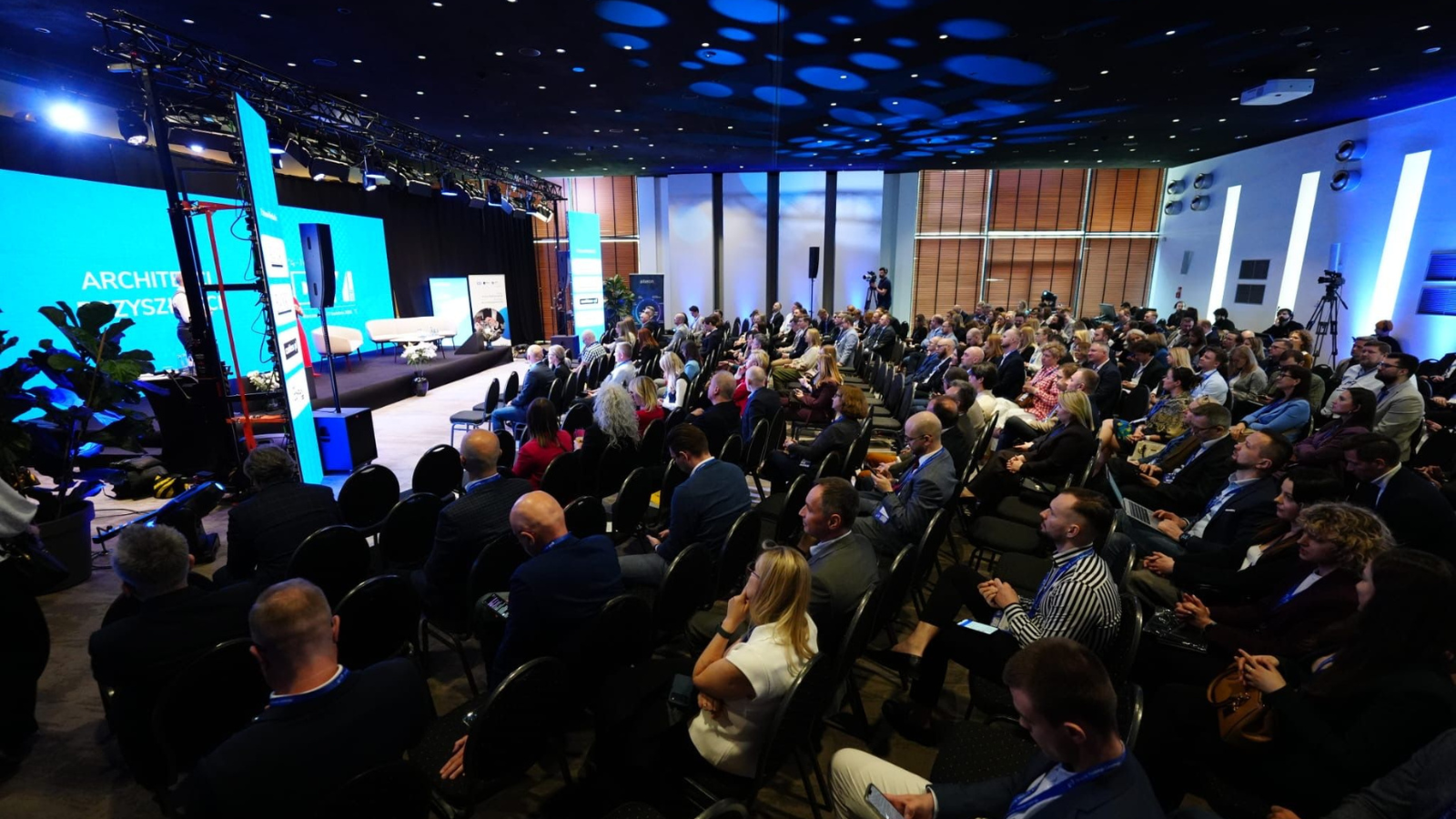
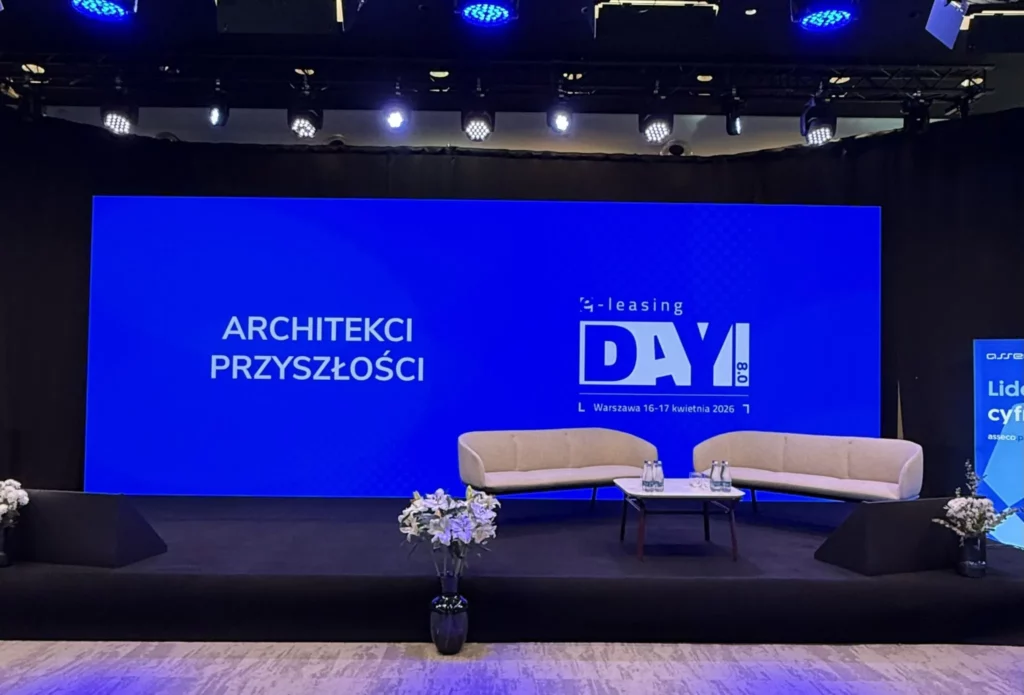
Another successful edition of e-Leasing Day is now behind us – an annual conference organized by the Polish Leasing Association, with whom we have been a partner since 2022. This year, we once again joined as a conference supporting partner, connecting with the Polish leasing community in the inspiring setting of the Olympic Center in Warsaw.
Held under the theme “Architects of the Future,” the event set the direction of discussion on how the industry is redefining itself under the pressure of accelerating digitalization, the rapid growth of AI, new regulatory frameworks, and evolving expectations of both customers and employees.
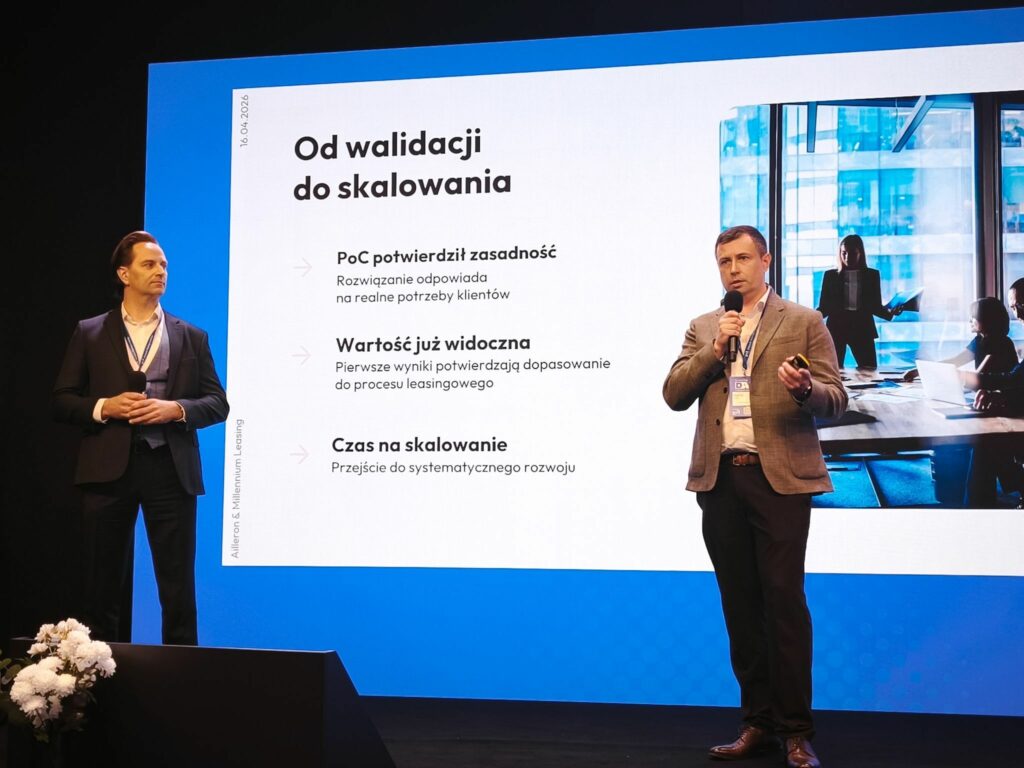
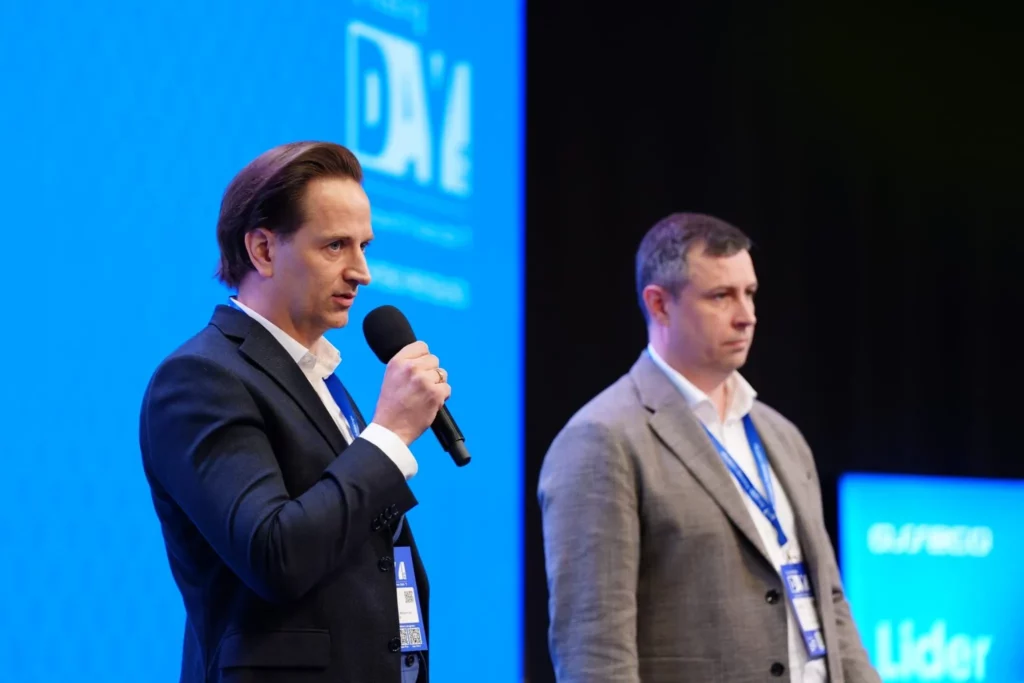
Over two energetic days, discussions revolved around technology, strategy, data, and the future of relationships with leasing clients. Looking ahead and translating the most relevant conference insights into future actions and day-to-day practice from the perspective of a technology provider for the leasing industry, let’s walk through the key takeaways. We’ll also recap the keynote session by Kamil Portka, Member of the Management Board and Head of Products at Ailleron, and Piotr Maj, Member of the Management Board at Millennium Leasing, who shared the outcomes of a Proof of Concept (PoC) carried out for our client as a practical validation tool that turns a business idea into a tangible solution.
Let’s start with why Millennium Leasing chose to validate the concept through Proof of Concept in the first place. The decision came from a strong understanding that a PoC is primarily a management tool – one that helps test whether a business idea truly makes sense before it consumes budget, time, and the entire organization's involvement. That approach is especially relevant in leasing, an industry built on complex, multi-step processes where even small errors can quickly scale. At the same time, transformation budgets are often significantly smaller than those in banking, making every investment decision far more critical.
At the same time, leasing customers’ expectations are rising as digitalization continues to advance. Banking has long set the standard for simplicity and easy access to services. As a result, not only are the regulatory environment and sales models changing, but customer expectations themselves are evolving as well.
In this context, the need to design PoC initiatives fits naturally within the landscape, as they do not promise full-scale transformation but instead enable controlled experimentation in a real business environment.
Why Testing Ideas Early Will Pay Off in Leasing?
Under these conditions, long-term transformation plans based on fixed assumptions are becoming less safe and less efficient. Increasingly, value is created by actions that:
- allow hypotheses to be tested quickly,
- reduce the risk of poor decisions,
- deliver data instead of opinions.
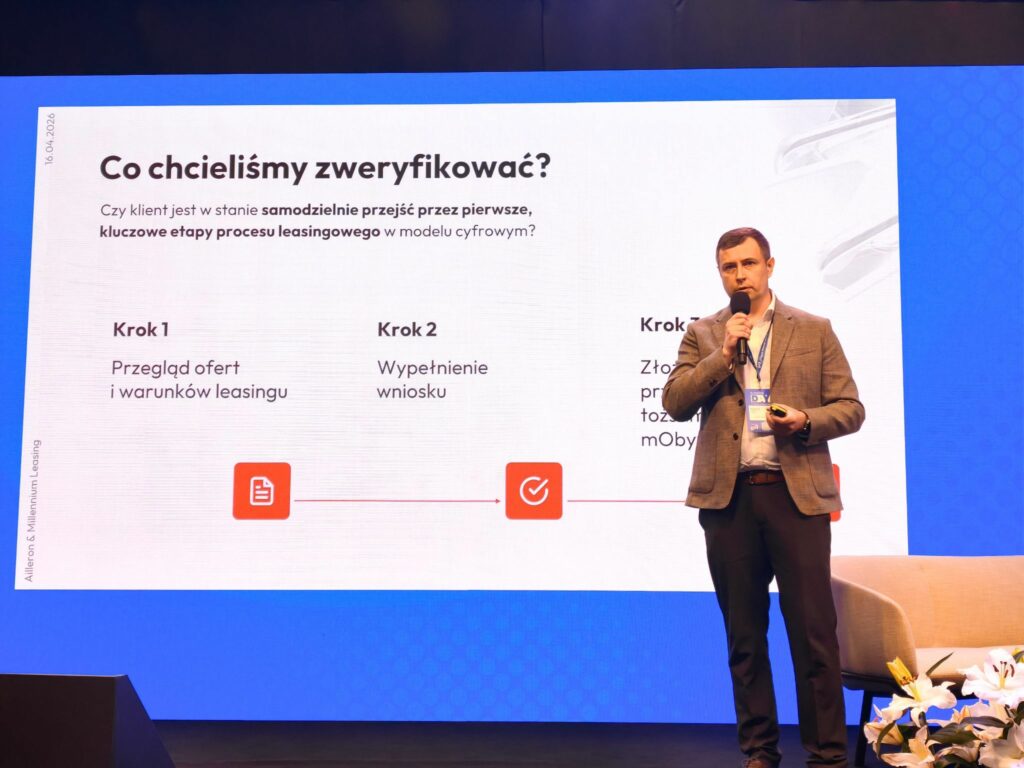
At Millennium Leasing, everything started with a clear hypothesis: customers should be able to independently go through the first key steps of the leasing process in a fully digital setup. Instead of committing straight away to a full rollout, the team decided to run a several-month PoC in a real operating environment, with actual customers and full integration into the lessor’s systems.
The scope covered:
- digital onboarding,
- online application submission,
- identity verification,
- communication within a single channel.
Years of experience from mature IT markets show a consistent pattern: the biggest challenge in digital transformation is rarely technology itself, but flawed initial assumptions.
In practice, this means organizations often implement solutions that work perfectly from a technical standpoint, but fail to solve real user problems. That’s why more and more companies are adopting a mindset familiar from the startup world, where testing hypotheses through PoC is not a project milestone, but part of everyday work. The core idea is simple: validate what users actually need, not what we assume they need.
This way of thinking fits particularly well in leasing. Full implementation here doesn’t just affect one system; it touches sales, operations, risk, and IT simultaneously, making early validation truly valuable. The role of PoC has clearly evolved. It’s no longer about answering the question “can we build it?”
The real questions now are:
- what is actually worth building – and in what order,
- whether customers really want to use the new solution,
- whether it solves their everyday problems,
- whether it simplifies the process, improves conversion, or reduces service costs.
Leasing processes are, by nature, multi-step and distributed. They require coordination across teams, integration with external data sources, and a high level of security, which means that even a small change can have wide operational consequences. A limited scope and clearly defined goals make it possible to identify what actually needs digitalization – and what is simply an internal habit rather than a real requirement.
Most importantly, a well-designed PoC does not mean disruption or radical change to daily operations. Quite the opposite – it allows large organizations to combine stability with the flexibility of startup thinking. As a result, companies can run experiments in parallel with ongoing operations, collect data, and draw conclusions without losing control over the process.
Proof of Concept Results and Lessons Learned from Real Customer Onboarding
After three months, 47% of applications were already being submitted through the new platform. By April 2026, that share had grown to over 60%. The process turned out to be more than twice as fast as the traditional journey, and customers quickly adopted mobile identity verification via the mObywatel service (58%).
Just as important was identifying where users dropped out and what still needed improvement. But the real value of the PoC didn’t lie in the numbers themselves – it came from the fact that decisions about further development could be based on real usage data rather than assumptions or declarations. At Millennium Leasing, this brought clear direction: which parts of the process are ready to scale, and which still need testing and refinement, without having to restart the entire project.
Where Will PoC Work Best in Leasing? Recommended Processes for Experimentation
Looking at how the leasing market is evolving, it becomes clear that the biggest space for experimentation is in customer- and partner-facing processes. That’s where it shows fastest whether digitalization truly simplifies things, or just moves complexity into a new channel.
One of the most natural PoC directions is digital onboarding designed mobile-first. Smartphones are now the primary tool for many customers, especially for micro-businesses, and it’s on mobile screens that friction first appears – unnecessary steps, unclear forms, and unintuitive process logic. From a PoC perspective, mobile onboarding becomes a real “truth test” for the leasing journey. If a customer cannot easily start the process on their phone, the issue is usually not technology – but process design.
Another strong area for testing is the configuration of pricing and leasing offers. More and more organizations are experimenting with models where customers can adjust financing parameters themselves and instantly see the impact on installments and total cost. Here, the key role is played not by the tool itself, but by how it supports the broader customer experience – and whether greater transparency and self-service actually lead to faster decisions and higher conversion rates.
Research from McKinsey & Company shows that B2B customers increasingly expect consumer-like experiences – simple, fast, and self-service by default. Leasing is not an impulse product, yet expectations are clearly shifting – especially among younger entrepreneurs. This direction is reinforced by findings from the Polish Leasing Association, which show that while advisory support still influences decisions, customers don’t expect overly complex relationships; they want what genuinely helps them move through the process easily.
Faster Way to Validate Leasing Customer Expectations
PoC projects without a mobile layer increasingly fail to reflect how users actually behave. Mobile brings everything back to basics by reinforcing simplicity and quickly revealing whether a process was designed around the customer or around internal structures.
There’s a common belief that leasing doesn’t really need a strong mobile presence because it’s a product people use only occasionally, often once every few years. In practice, even if a leasing contract is signed only from time to time, the relationship with the service is ongoing. Mobile becomes the everyday channel for comparing offers, checking application status, communicating, managing documents, or handling payments. The experience is not defined by the moment of signing, but by a series of small interactions spread across weeks or months.
The case of Ailleron and Millennium Leasing shows that even a relatively short, well-structured PoC can deliver valuable insights that support better, data-driven decisions. Instead of relying on assumptions, organizations gain clarity on what is ready to scale and what still needs improvement. In a fast-changing environment, that experience is increasingly what defines real value.
Do You Want to Validate Your Concept Before Market Launch?
About author

Project Manager with 10+ years in IT and 5+ years in delivering digital solutions in the finance sector. A team manager and expert with solid technical and analytical background combined with high business awareness. Proficient Scrum-based project management, especially for self-service & sales support systems, as well as systems cooperating with e-commerce platforms.