

Data. CRM. AI. A New Architecture of Relationship Banking – Technology Breakfast Recap with Creatio and FinTech Poland
10 April 2026

Why do banks – despite significant investments – still operate in silos, both across data and CRM systems? Where does AI truly create value, and where does it stop at proof of concept without making it into production? And how can data, CRM, and AI be brought together into a cohesive decision-making ecosystem that integrates processes and accelerates the entire organization? These and many other topics were at the heart of our April technology breakfast, co-hosted with our partners Creatio and FinTech Poland. Let’s summarize all the presentations and wrap up the most insightful takeaways from this meeting.
Paweł Bułgaryn, Advisor to the Management Board at FinTech Poland, opened the session by discussing how the rapid development of artificial intelligence is changing the way banks make decisions, engage customers, and improve the efficiency of key processes.
Hyper-personalization of Customer Engagement in Modern Banking
Together with a group of banking experts, we examined how the synergy between data platforms and CRM drives real improvements in sales performance and customer service. We also addressed hyper-personalization in customer interactions and the shift from mass communication to more contextual, smart dialogue.
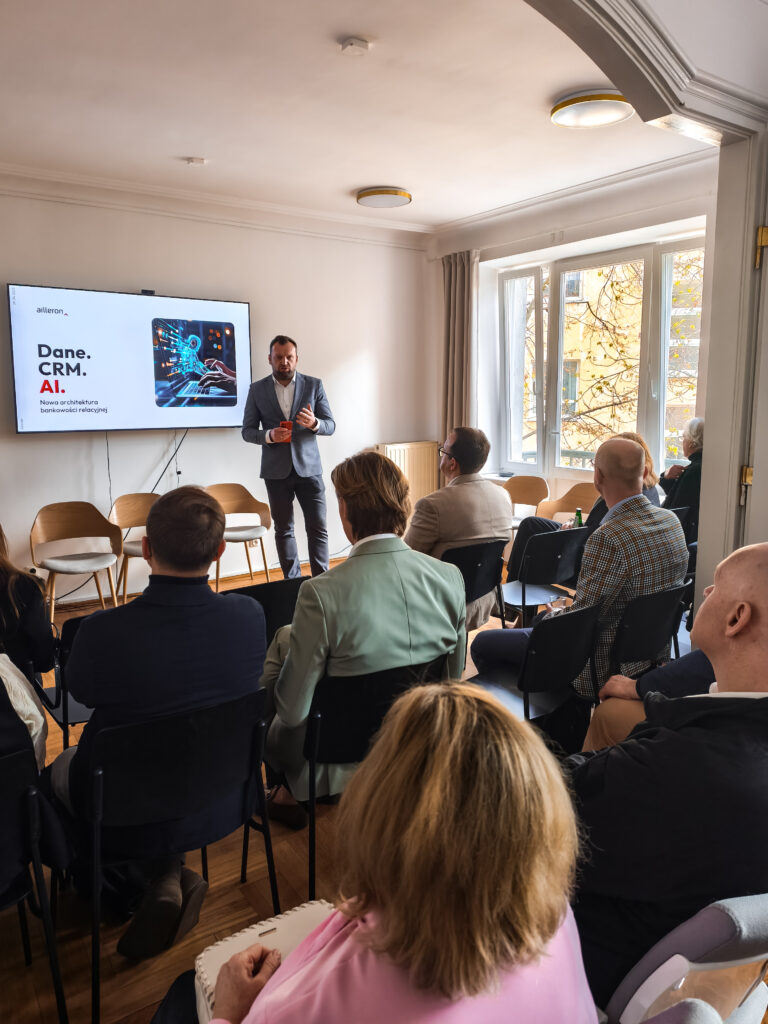
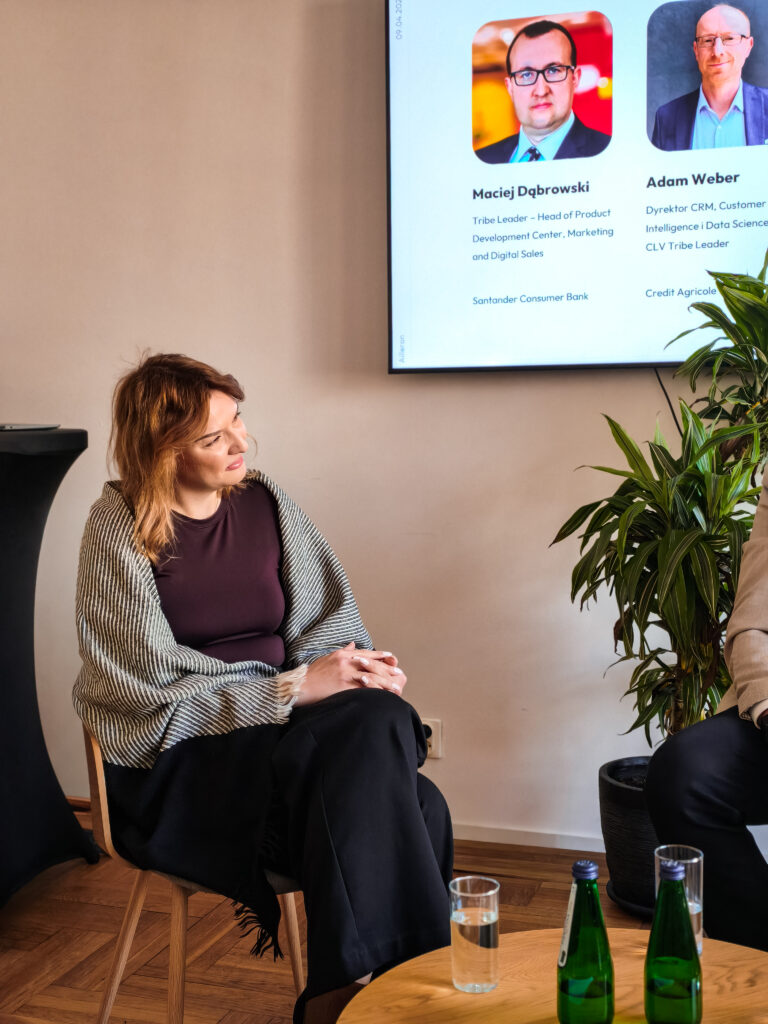
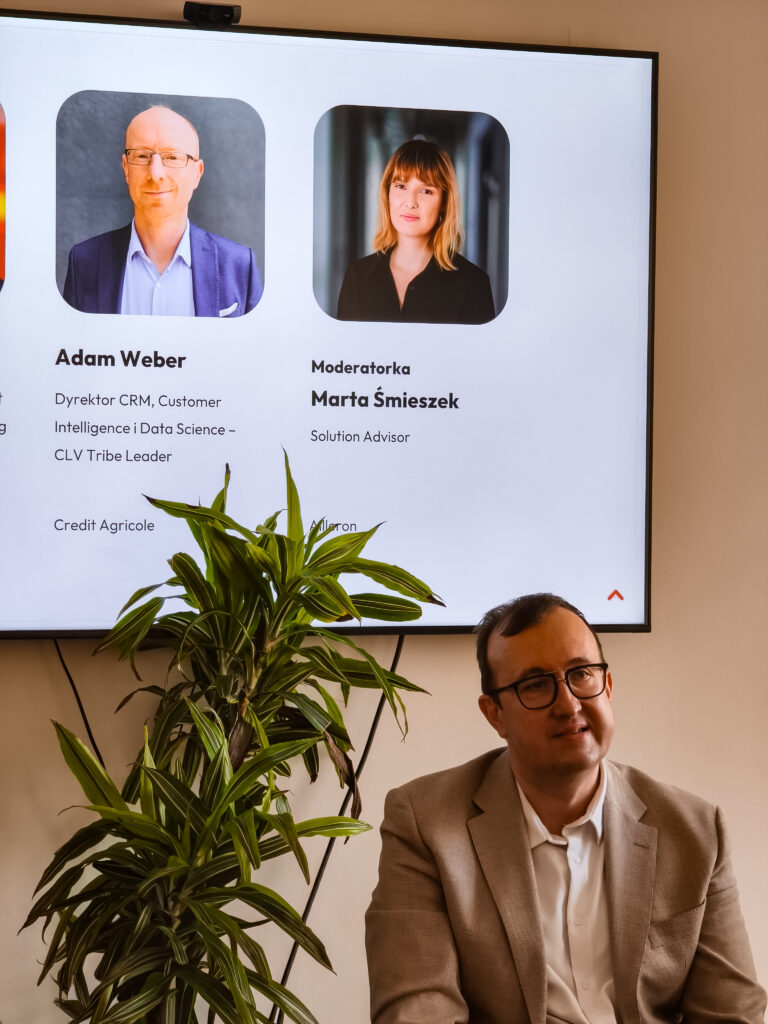
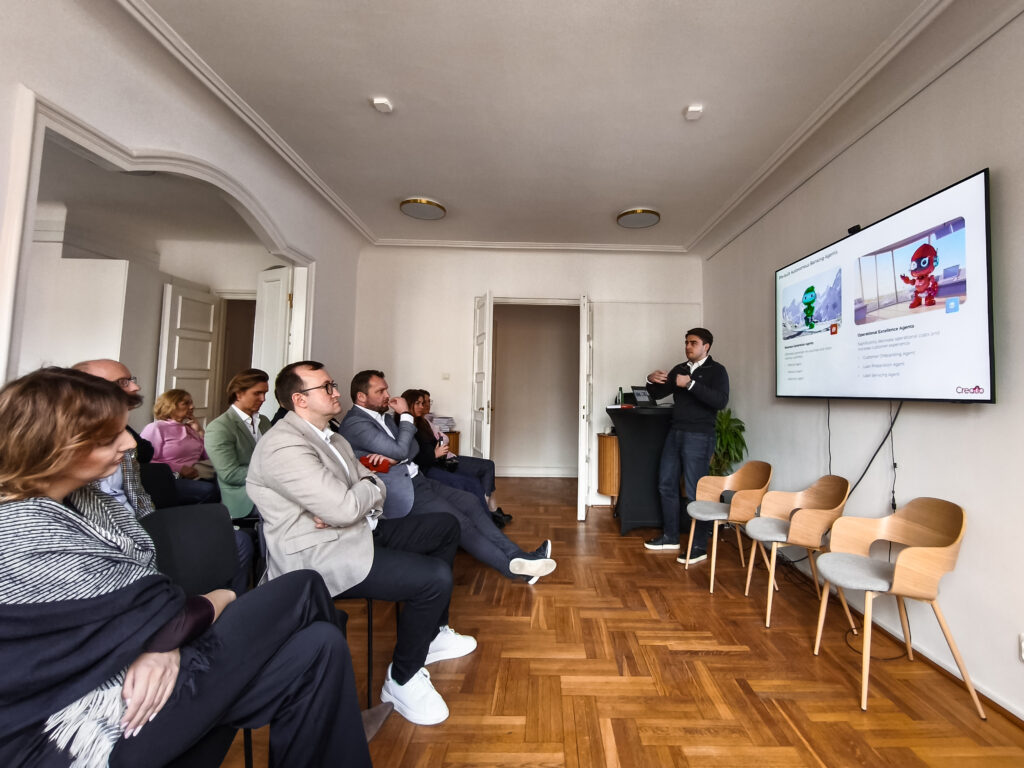
We discussed hyper-personalization by looking at how artificial intelligence, Big Data, and machine learning work together to create truly tailored customer experiences. Building on this, together with the audience, we identified several key challenges banks face in customer service, including limited personalization in communication, low satisfaction with digital channels, trust gaps, and constraints in accurately understanding customer needs. When it comes to the key building blocks of hyper-personalization in banking, Dawid Klempka, General Manager Financial Services, highlighted several core elements during his presentation: dynamic recommendations, real-time messaging, adaptive interface personalization, intelligent support, and customer suggestion modules.
Adam Weber, Head of CRM, Customer Intelligence and Data Science – Customer Lifetime Value Tribe Leader at Credit Agricole Bank Polska S.A., continued the discussion on hyper-personalization, noting that it should be carefully aligned with current customer expectations. He pointed out that, as banking and technology professionals, we must ensure that communication remains balanced in frequency, appropriate in form, relevant in content, and genuinely useful, avoiding any sense of excess or disconnect from what our audience actually needs.
"Today, It’s Not Technology That Holds Us Back – It’s Regulation"
He also highlighted that regulatory changes are playing a significant role in the shifts observed on the market. Data platforms are now critical in enabling timely responses to customer behavior, especially given that data still comes from numerous, fragmented sources.
A core challenge for banking specialists working on digital solutions today is keeping customers loyal and actively engaged with banking products. In daily work, we rely on both active and passive CRM systems that support advisors, for example, by surfacing contextual insights for conversations or identifying relevant sales opportunities.
As specialists in banking digitalization and technology providers, we are working to improve advisors’ efficiency in several ways. On the one hand, AI agents support real-time analysis, including behavioral data. They also make customer conversations easier to conduct. A bank advisor can, for example, dictate a note that is then automatically converted into CRM events and executed within the system.
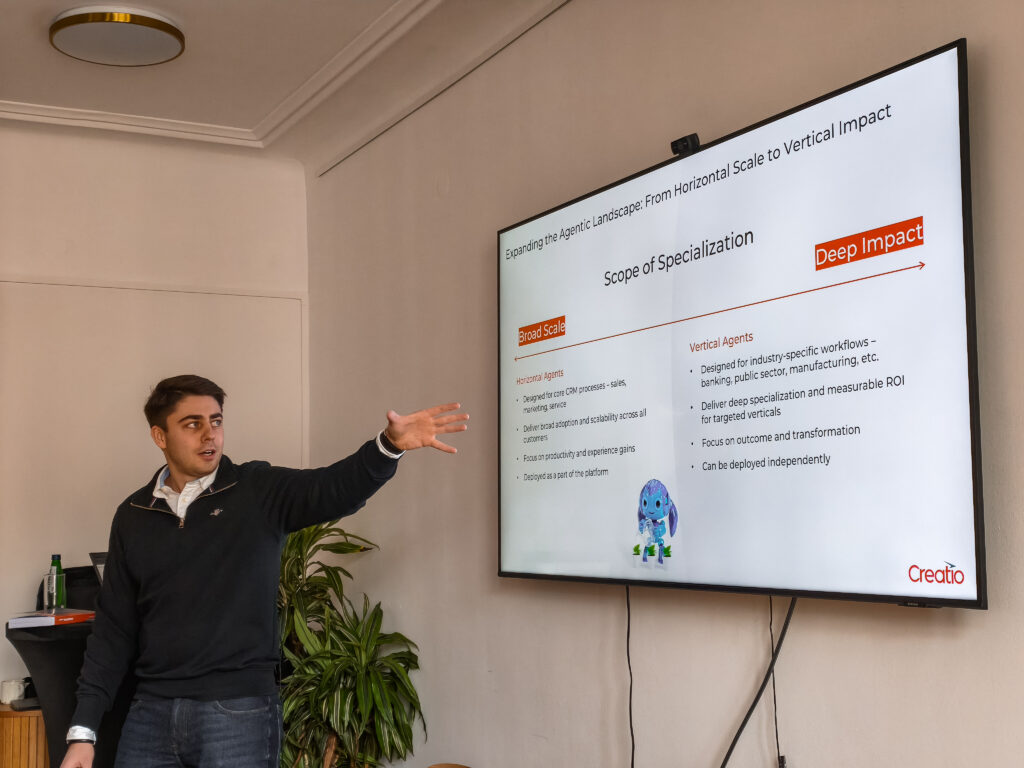
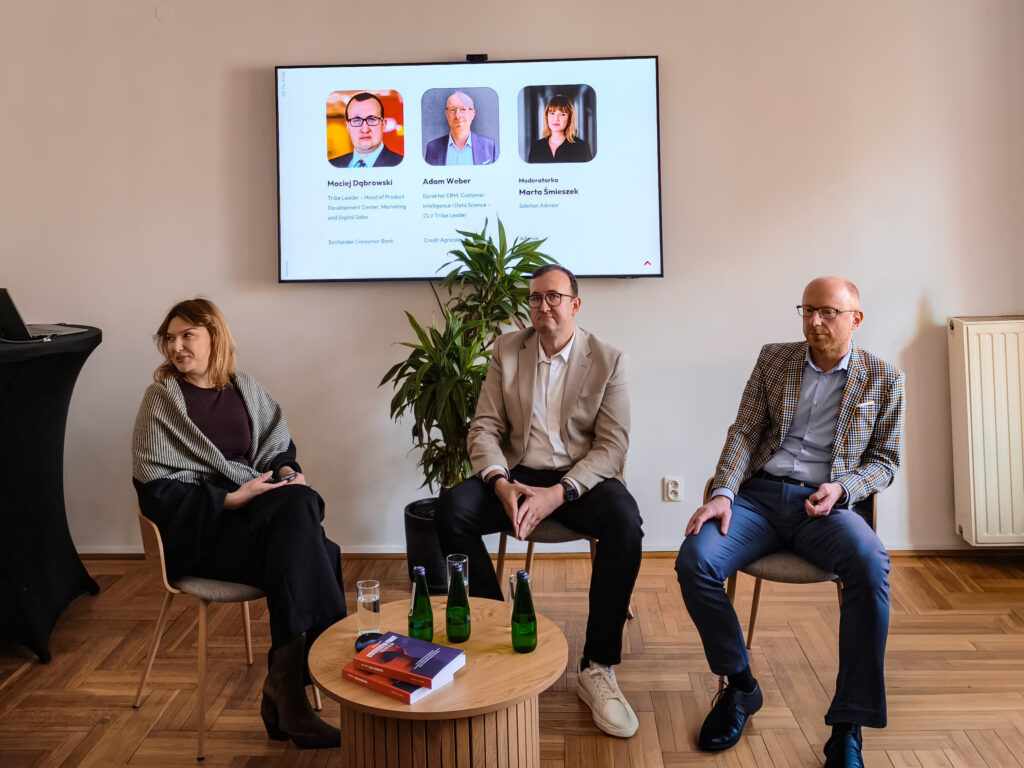
The discussion also touched on the intriguing concept of human-in-the-loop (HITL), which involves keeping humans actively engaged in AI-driven decision-making. According to Adam Weber, implementing this approach across all processes and communications is not currently feasible. He emphasized, however, that measuring customer reactions in mobile channels – especially in the context of highly mass-scale communication – should be a top priority today.
Maciej Dąbrowski, Tribe Leader, Product Development, Marketing & Digital Sales (Loans/Cards) at Santander Consumer Bank S.A., highlights that the physical customer service network still plays an important role, but customer expectations toward it have changed significantly. He sees hyper-personalization as a way to better support customers in their interactions with the bank, as well as to proactively alert them to potential risks.
The Growing Role of Agentic AI in Banking and Early Real-Life Deployments
A key theme in the discussion on hyper-personalization is its role in end-to-end offer management. Santander Consumer Bank S.A. is moving away from the traditional segmentation of banking customers into wealth, affluent, and other groups. The bank is currently testing AI agents that help shape customer communications. In this context, hyper-personalization is intended to streamline and simplify these processes.
At this point, it's worth referencing Gartner’s predictions, cited by Aleksander Kaszewski, Enterprise Executive Strategic Clients PL & CEE at Creatio, during his presentation. According to these forecasts, at least 15 percent of day-to-day work decisions will be made autonomously through agentic AI by 2028, up from 0 percent in 2024.
Banking digitalization specialists are, of course, aware that processes must be designed to be intuitive and tailored to digital channels, which customers are choosing more and more often. Driven by this shift in customer preferences, banks are gradually moving more advanced, complex processes to remote channels.
Maciej Dąbrowski concluded his presentation by noting that the banking sector is still behind other industries when it comes to fully leveraging the potential of hyper-personalization. Banking is only now adopting what has long been standard elsewhere, such as personalized content on streaming platforms tailored to individual viewers' profiles.
Adam Weber added that in banking, it’s becoming increasingly difficult to identify the single trigger that truly influences a customer’s decision. Customers are exposed to dozens of campaigns, multiple notifications, and constant competition for their attention, as other providers are also trying to capture it with their own offerings.
Maciej Dąbrowski, in response, emphasized the importance of delivering the right product to the right customer at the right moment. In search of this balance, it’s worth closely observing how customers respond to messaging, analyzing their behavior, drawing conclusions, and adapting communication channels to their expectations.
In Adam Weber’s view, the battle for customer retention is ongoing. In banking, additional products are sold through cross-selling, and both hyper-personalization and machine learning models play a key role in supporting these efforts.
How to Address Common Data Quality Challenges?
The knowledge-sharing part of the event concluded with a panel discussion featuring banking representatives, titled “From Silos to Ecosystem: How to Connect Data, CRM and AI in the Bank of the Future?”
Participants were invited to take part in the debate to jointly explore, among others, the questions put forward by the bank representatives:
- Looking across different types of banks – universal, consumer finance, and cooperative – what most differentiates their approach to using data in marketing and customer service?
- Do you believe that maturity in Data + CRM + AI depends more today on technology or on organization and processes?
- How much of the business value in personalization comes today from data latency and reliability in the channel itself?
- How can banks balance upsell needs, mobile-first approaches, and personalization with simple communication, so customers do not feel overwhelmed?
- In cooperative banks, transactional data is a major asset – how can it be turned into real marketing personalization rather than just reporting?
What we value most as organizers is how the conversation carried on on stage after the presentation. The audience’s questions sparked a genuinely engaging discussion with the panelist, Dawid Klempka, and the session moderator, Marta Śmieszek, Solution Advisor at Ailleron. One of the topics touched on was a challenge we often hear from clients – how to deal with distorted input data that results in outputs misaligned with reality, and what can be done to address it.
Another question focused on a real-life case study demonstrating how customer data can be enriched with external data sources. Maciej Dąbrowski emphasized that in such situations, compliance plays a vital role. He gave a practical example, noting that when a customer starts an installment credit process, it’s technically possible – with consent – to analyze behavior at the payment gateway. As one participant rightly pointed out, it’s worth involving the compliance team from the start of the process, treating their input as part of the solution rather than a final-stage checkpoint.
About Creatio
Creatio is a global vendor of an agentic CRM & workflow platform with no-code and AI at its core, where people and AI agents work together with no limits on users, AI agents, or scale. Creatio enables business users without technical skills to build and deploy applications and AI agents using natural language and visual no-code designers.
About FinTech Poland
FinTech Poland is the largest fintech association in Poland and an independent foundation whose main objective is to foster and accelerate financial innovation in Poland and to develop a regional FinTech Hub. Fintech Poland brings together all kinds of financial innovation companies to build a strong fintech ecosystem in Poland and level up Warsaw as a leading fintech hub for CEE.
About Ailleron S.A.
Ailleron is a Polish technology company with over 20 years of experience, specializing in fintech solutions for the financial sector. It develops and implements software for banks, fintechs, and leasing companies, spanning digital banking and mobile apps, data systems, and process automation. Operating globally, Ailleron serves clients in dozens of countries and has been listed on the Warsaw Stock Exchange since 2011.